Track advertising performance with dynamic QR codes. Compare scan data across posters, banners, and locations to see what works and optimize campaigns.
Using Dynamic QR Codes in Advertising: Track What Works
Traditional advertising can tell you where an ad ran, but it rarely tells you which placement actually caught people's attention. A QR code for advertising solves that problem by turning a poster, banner, or storefront display into something measurable. Instead of judging performance only by impressions or foot traffic, marketers can compare real scan activity across locations and see which placements truly generate interest.
For campaigns running across multiple locations, dynamic QR codes make this process far more powerful. By assigning a unique code to each poster or banner, marketers can trace scan activity back to a specific placement and make smarter decisions about where to put their advertising budget.
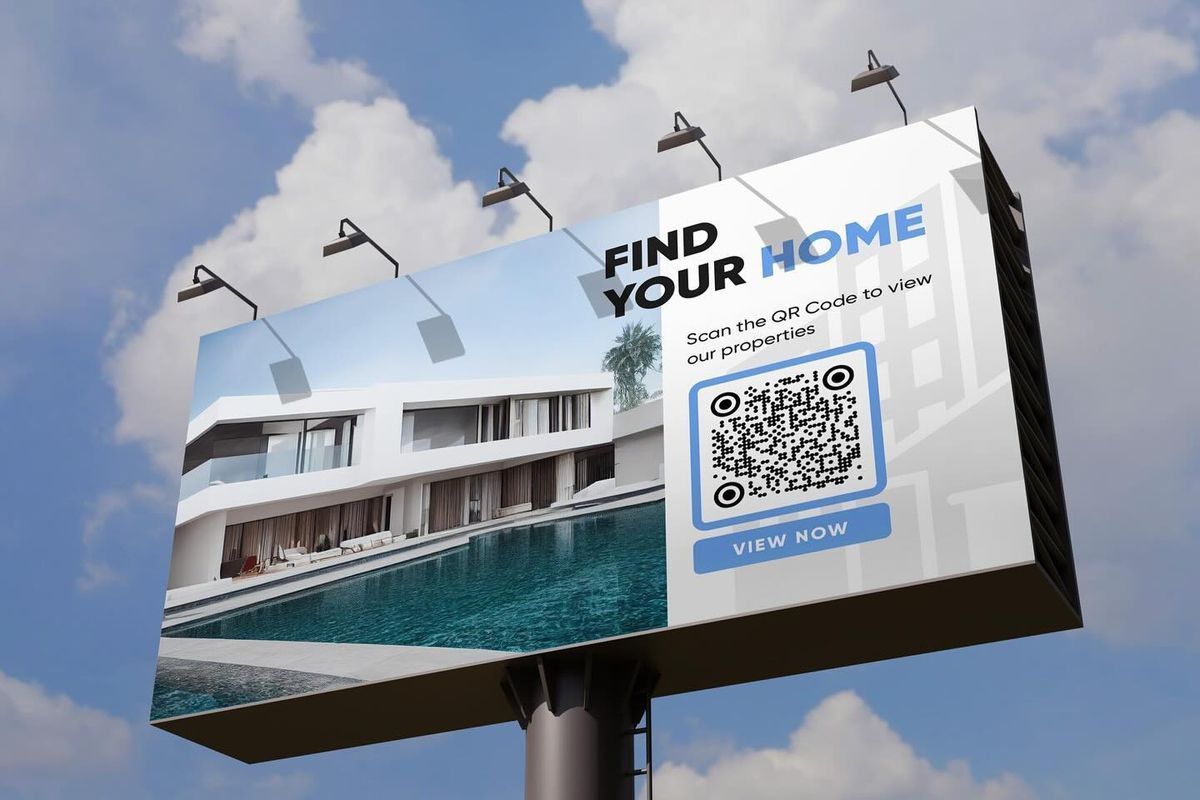
QR code billboard advertising real estate - Source: Pinterest
Why Use a QR Code for Advertising?
QR codes give people a direct bridge from a physical ad to a digital experience. A poster might promote a product, announce a special offer, or introduce a new service, while the QR code sends viewers straight to a landing page, promotion, registration form, or product page.
The real advantage, though, is measurement. A printed ad on its own can't tell you how many people engaged with it. A dynamic QR code can, giving you scan data that reveals how each advertising location is actually performing. This makes QR code for business marketing particularly useful for businesses that want to connect offline promotions with measurable digital engagement.
For example, a brand might run the same campaign across:
- A shopping mall poster
- A storefront window
- A bus shelter
- An event banner
- A billboard near a busy intersection
Rather than using one QR code everywhere, it's far more useful to create a separate dynamic code for each placement. The campaign message stays consistent, while the scan data shows exactly which location performs best.
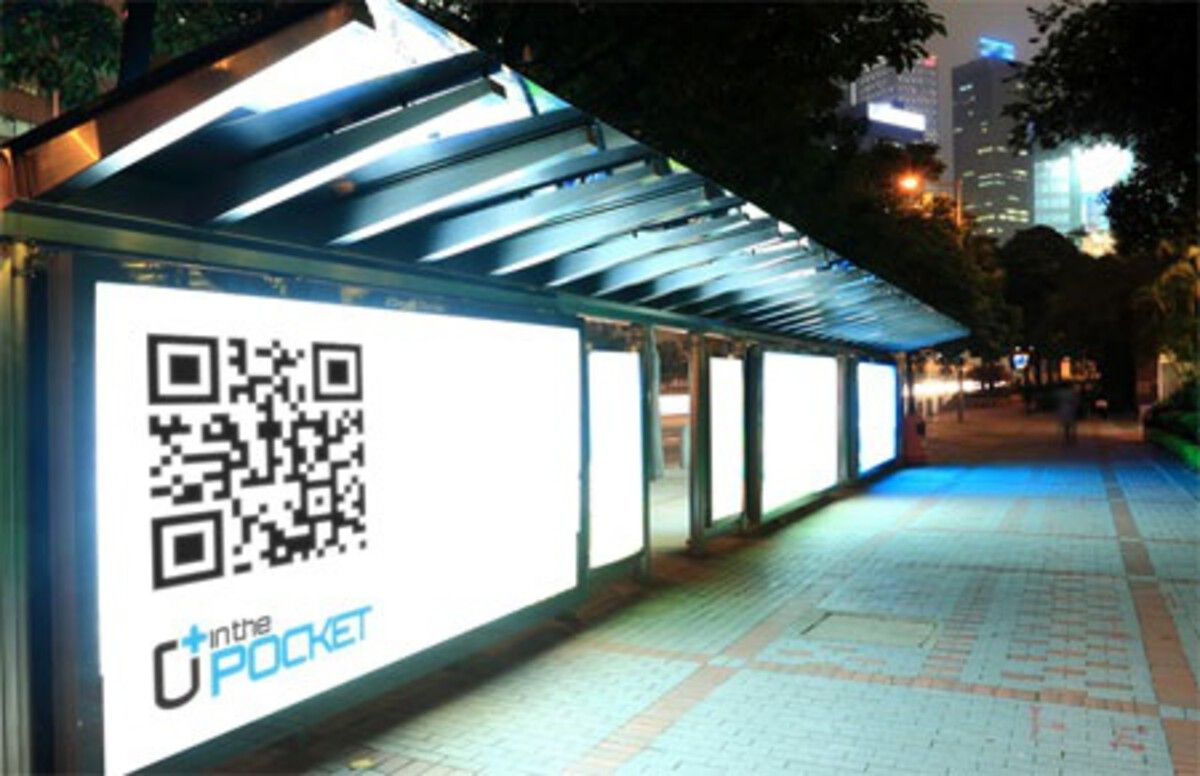
QR code ad placement bus shelter - Source: Pinterest
>>> Read more: How to integrate QR codes into every marketing campaign?
Track and Compare Every Placement
The most important step in measuring offline advertising is making sure every placement is distinguishable. Imagine a retailer running a summer promotion across five stores. If every poster shares the same QR code, the campaign might generate plenty of scans, but there's no way to know which store actually drove that engagement.
Instead, create five dynamic QR codes, one for each spot:
- Store A: Entrance
- Store B: Checkout
- Store C: Window
- Store D: Shopping Mall
- Store E: Street Banner
Each code can point to the same promotional landing page. What changes is that every scan stays tied to its specific placement, giving you a clean way to compare physical locations without touching the creative concept at all. Once every placement has its own dynamic QR code, scan analytics become a genuinely practical optimization tool. Look at how many scans each location generates over the same time period. A poster in a busy shopping district might outperform one in a quieter area. A storefront window might beat a large outdoor banner simply because people have more time to stop and interact with it.
The goal isn't just to find the single code with the highest scan count. It's to spot patterns. Worth comparing:
- Scans by location: which placement drives the most interaction?
- Scans over time: when does each placement get the most attention?
- Device data: are people scanning mostly from smartphones or other devices?
- Campaign periods: does activity spike after a promotion or creative refresh?
This kind of analysis helps marketers see which placements deserve more investment and which ones need to be redesigned, relocated, or dropped entirely.
Example: Finding the Best Poster Location
Picture a restaurant promoting a new seasonal menu with posters in three spots:
- Poster A: Outside the restaurant
- Poster B: Inside a nearby shopping mall
- Poster C: At a local event
Each poster carries the same offer and call to action, but each one uses its own dynamic QR code. After two weeks, the data shows Poster B pulling in significantly more scans than the other two. That suggests the mall placement is reaching an audience that's more inclined to engage with the promotion.
The restaurant can act on that insight right away. Rather than splitting the advertising budget evenly across all three, it can lean into the placements that have already proven themselves. This is the moment a QR code for advertising stops being just a convenient link and becomes a real measurement point for offline marketing.
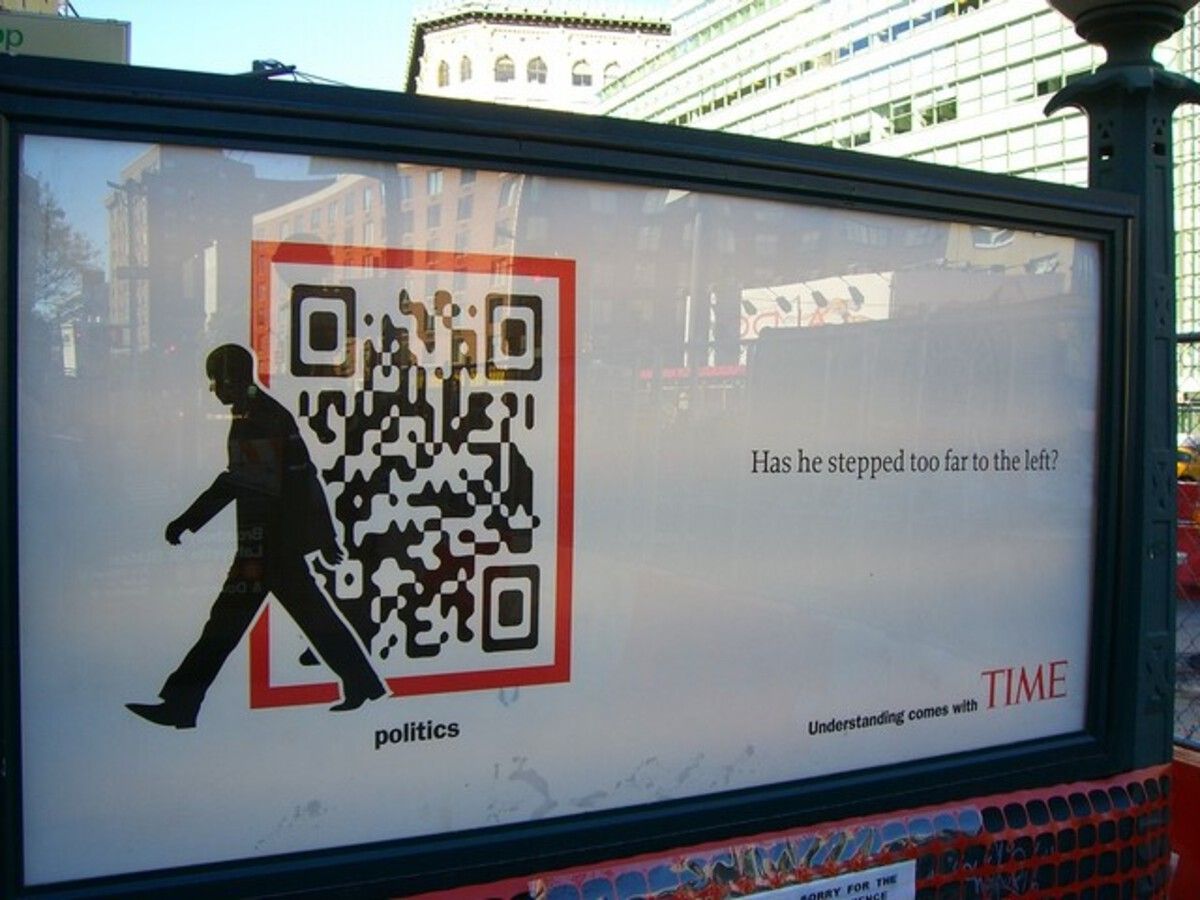
QR code tracks ad placement performance - Source: Pinterest
Keep It Flexible and Easy to Scan
Advertising campaigns often evolve after the printed materials are already out in the world. A promotion ends, a product page moves, or the campaign needs to point somewhere new. A dynamic QR code lets marketers update the destination without ever reprinting the physical QR image, which matters a lot for long running posters and banners that might stay up for weeks or months.
An outdoor banner, for instance, could initially send people to a product launch page. Once the launch period wraps up, that same printed code could redirect to a discount page or a seasonal promotion instead, with zero reprinting required. None of this analytics data matters if people can't actually scan the code in the first place, so design and placement deserve real attention. Keep strong contrast between the code and its background, leave clear space around it, and avoid placing it over busy or cluttered visuals. Make sure it's sized appropriately for the expected viewing distance.
The call to action matters just as much. A QR code without context is just an unexplained graphic. Give people a reason to scan:
- Scan for 20% Off
- Scan to View the Collection
- Scan for Today's Offer
- Scan to Enter
- Scan for the Full Menu
A clear, compelling reason to scan turns the code into part of the advertisement itself, rather than an afterthought bolted onto it.
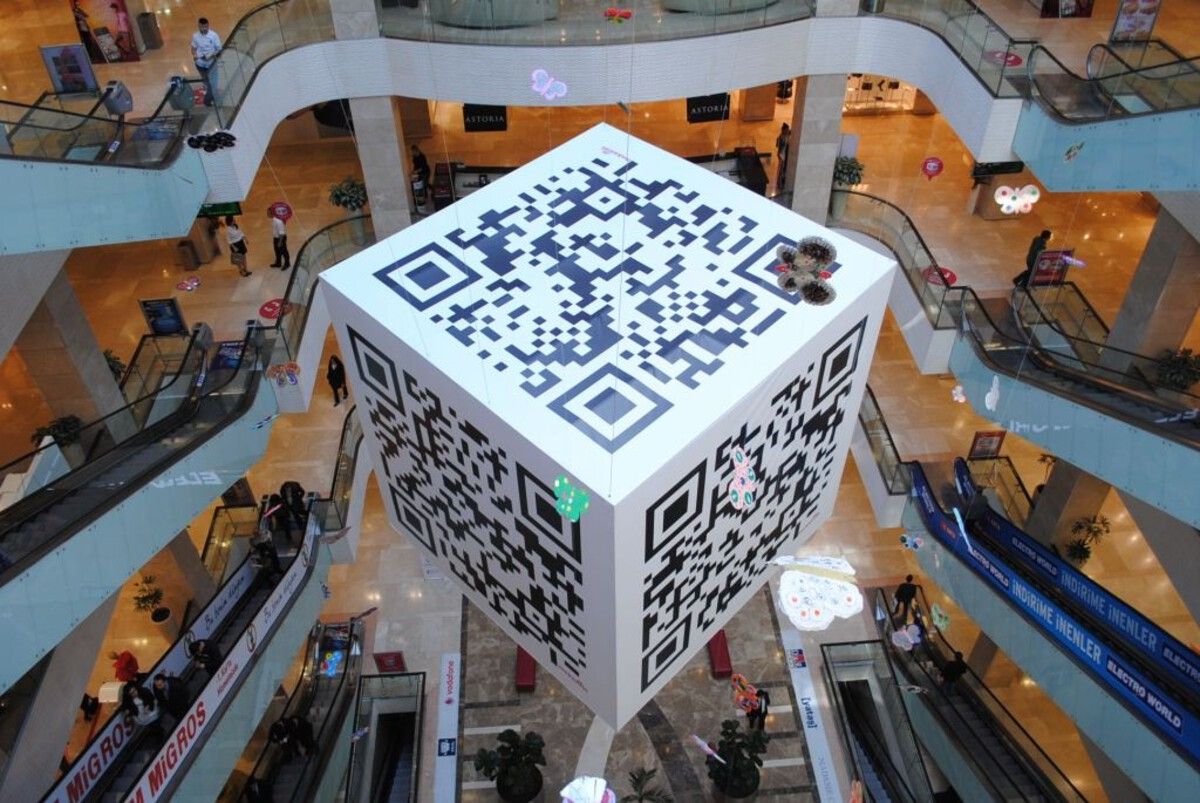
QR code flexible scannable mall display - Source: Pinterest
>>> Read more: 5 Common QR Code Marketing Mistakes That Undermine Campaign Effectiveness
Turn the Data into Better Campaigns
The real payoff of QR analytics comes from applying what you learn to future campaigns. If a location consistently drives strong scan activity, test a similar placement somewhere else. If a banner barely gets any scans, dig into why: is it the location, the visibility, the code size, the offer, or the call to action?
It also helps to compare placements across different campaigns rather than treating each one as an isolated test. Over time, that broader view reveals which physical environments genuinely work for your audience. For businesses running frequent offline promotions, this becomes a simple, repeatable feedback loop:
Place → Scan → Measure → Compare → Optimize
Instead of printing ads and hoping for the best, marketers get to use real interaction data to shape the next campaign. A dynamic QR code delivers exactly what offline advertising has always lacked: flexibility paired with measurable results. For posters and banners, the simplest approach is to give every placement its own unique code, keep naming consistent, and compare scan data across the full campaign period.

QR code campaign data optimization loop - Source: Pinterest
Conclusion
A QR code for advertising can turn a static poster or banner into a measurable marketing touchpoint. The key isn't slapping the same code on every ad. It's giving each placement its own dynamic code so you can compare scan activity and understand exactly which locations attract the most attention.
With that approach, offline advertising becomes something you can actually measure, test, and improve. Instead of wondering whether a poster worked, you get to ask which poster worked best, where, and when, and use those answers to make your next campaign even stronger. For businesses ready to put this approach into practice, QRCode GEN provides a straightforward way to create and manage QR codes for advertising campaigns.
Frequently Asked Questions
What's the difference between a static and a dynamic QR code?
A static QR code has its destination baked directly into the image, so once it's printed, the link can never change. A dynamic QR code points to a short redirect URL that you control, meaning the underlying destination and the scan data can be updated at any time, even after the poster or banner is already in circulation.
Do people need a special app to scan an advertising QR code?
No. Most modern smartphones can scan a QR code directly through the built in camera app, without installing anything extra. That's part of what makes QR codes such a low friction bridge between print advertising and a digital landing page.
How long does a dynamic QR code stay active?
A dynamic QR code generally stays active for as long as your account or subscription with the QR code provider remains active, since the code relies on a redirect service rather than a fixed, self contained link. It's worth checking your provider's terms so a long running campaign doesn't lose its code partway through.
Ready to see this in action? Create your first dynamic QR code today and start turning every poster and banner into a source of real, actionable data.