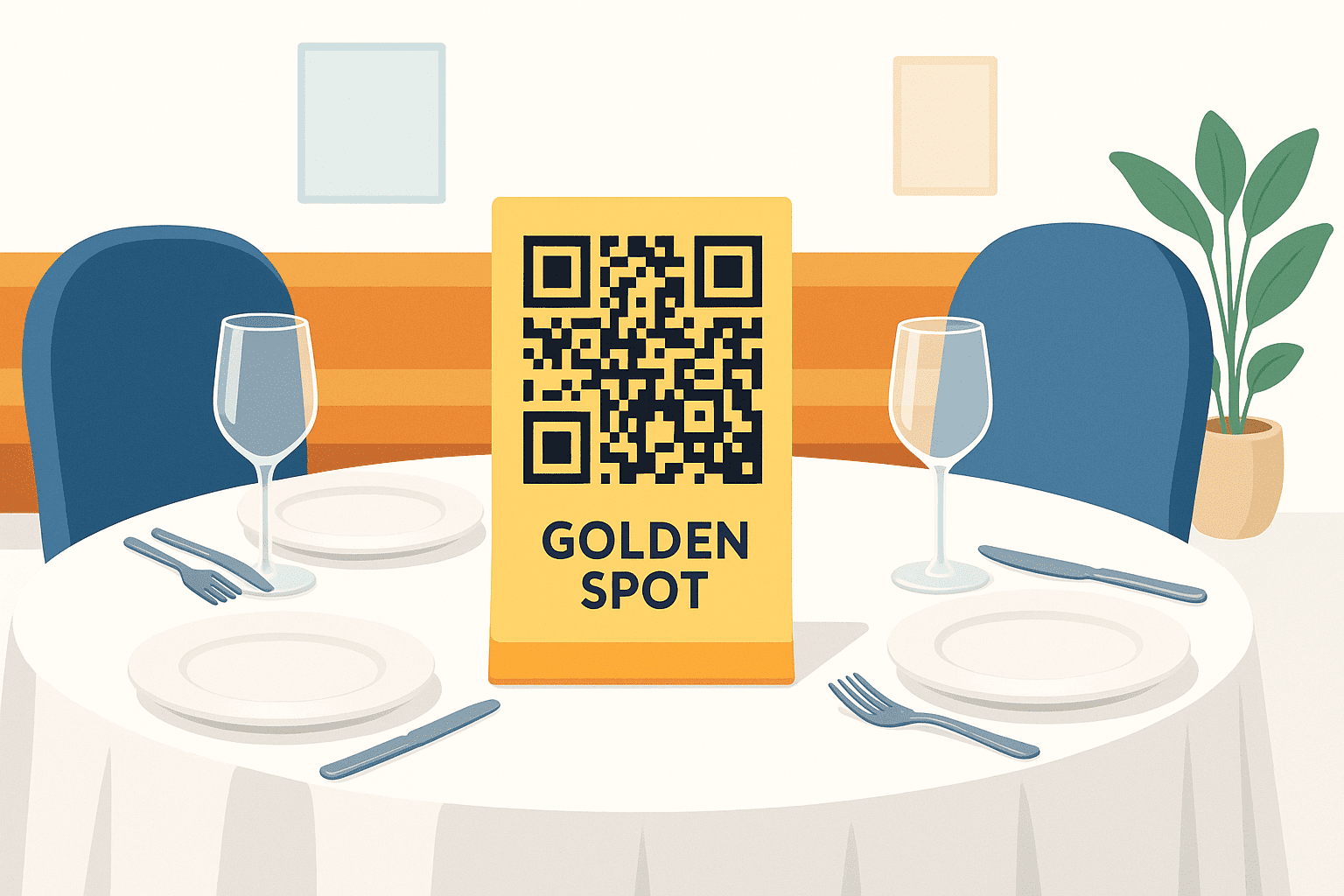
A well-designed QR menu only works if guests actually scan it. In fast-moving hospitality and F&B settings, where each interaction lasts only moments, QR code placement determines whether an in-person experience leads naturally to a digital one.
Effective placement is not simply about visibility. It depends on customer behavior, the layout of your venue, and the right moment to invite interaction. Finding the best location for your QR menu can help increase scans, encourage engagement, and support revenue in measurable ways.
1. Understand Customer Behavior and the “Scanning Moment”
Before choosing a location, consider when and why guests are likely to scan. This is the “scanning moment.”
1.1. The Waiting and Settling-In Moment
When guests have just arrived at their table, they may be waiting for service or taking in the space. Their attention is available, and they are often looking for information. Place the QR code where they can access it immediately, without needing to call a staff member.
1.2. The Within-Reach Principle
The best location lets guests scan without leaning across the table, stretching uncomfortably, or moving items aside. It should sit within a natural arm’s reach and remain in their direct line of sight while seated.
1.3. Lighting and Scan Angle
Lighting is a technical detail that matters. Avoid direct glare, which can reflect off glossy materials, as well as dim areas where phone cameras may struggle to focus. Position the code on a flat surface at an angle that faces the guest and is easy to scan.
2. High-Visibility Locations on Dining and Service Tables
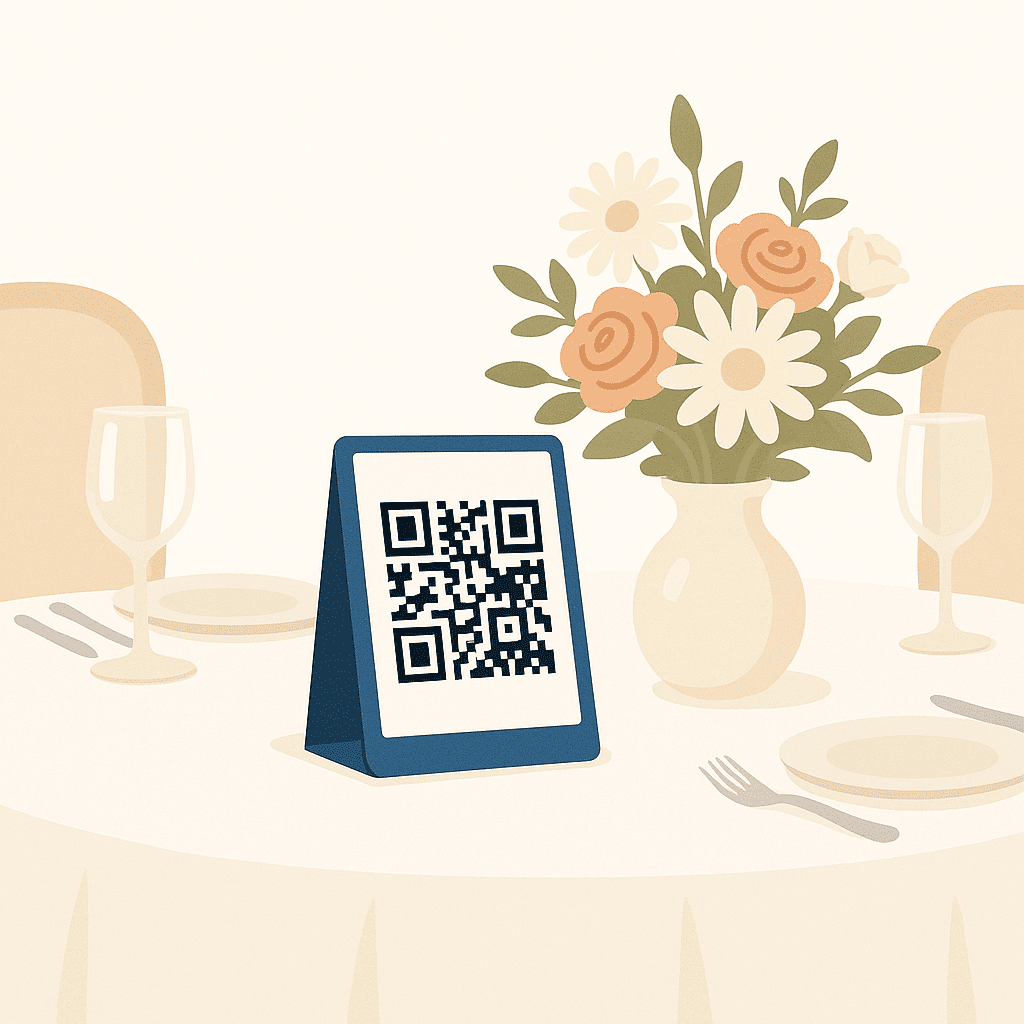
Dining and service tables are often the most effective places for QR codes because they align directly with a guest’s main goal: ordering food and drinks. A digital restaurant menu can be positioned in several practical formats.
2.1. Acrylic or Wooden Table Stand
- Benefits: This is a prime location because it naturally draws attention at the center of the table. An upright stand looks professional and can be scanned by several guests at once.
- Optimization: Choose sturdy, premium materials, such as engraved wood or clear acrylic, so the stand does not tip over or get easily displaced. Make it tall enough to remain visible above drinks and other table items.
2.2. Coaster or Placemat
- Benefits: This placement is highly effective because guests interact with it as soon as their drinks arrive.
- Optimization: Make the QR code large and high-contrast, and print it on durable, waterproof material. Keep it far enough from the glass rim that it will not be covered.
2.3. Receipt or Receipt Holder Sticker
- Benefits: This is well suited to secondary calls to action, such as service feedback or membership registration. Guests encounter it at the end of their visit.
- Optimization: Send guests to a concise feedback landing page. Since they may be in a hurry, the destination should be simple and clear.
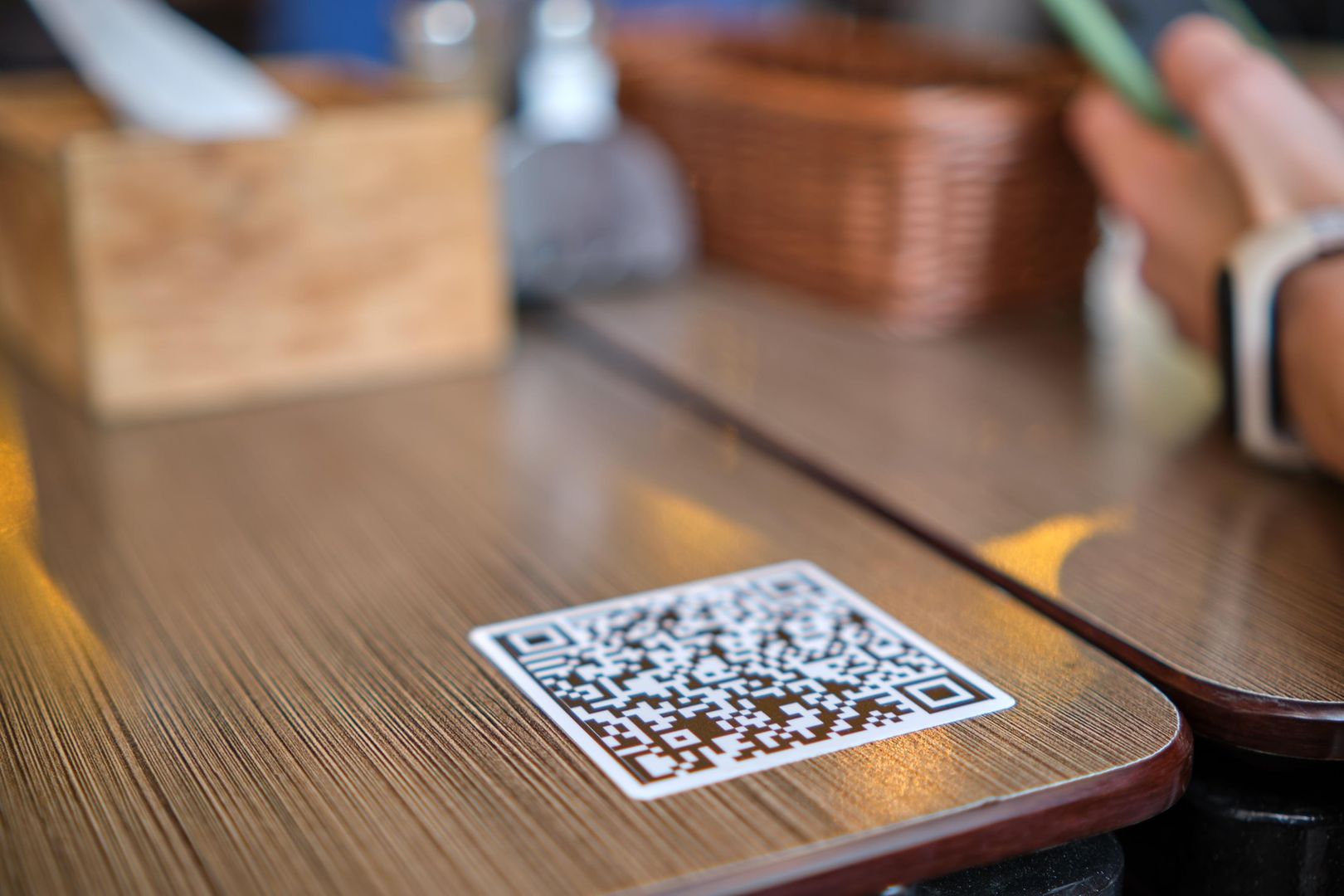
2.4. Engraved or Fixed Directly to the Table
- Benefits: This option is permanent and tidy, making it particularly suitable for outdoor tables, rooftops, or areas exposed to wind and weather.
- Optimization: Use this approach only when the table surface is clean and not excessively glossy, which can create glare.
3. Effective Locations in Reception and Waiting Areas
Reception and waiting areas serve a different purpose: creating a strong first impression, sharing general information, and giving guests something useful to explore while they wait.
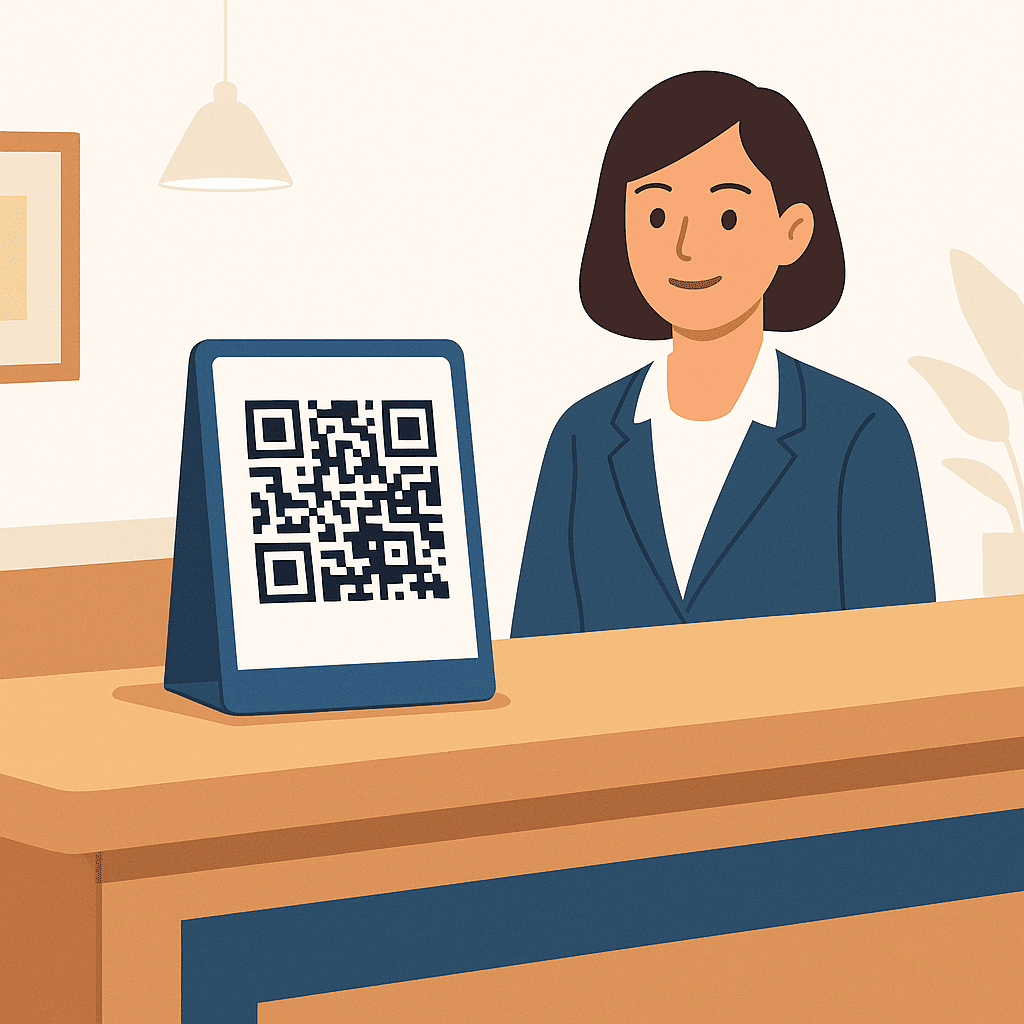
3.1. At the Reception Desk
- Benefits: The reception desk is often the first point of contact, where guests can access general information about the venue.
- Optimization: Link this QR code to general information, such as opening hours, F&B outlets, Wi-Fi, and current promotions, rather than a detailed menu. Display it on a professional stand at eye level, approximately 1.4–1.6 m from the floor.
3.2. Waiting-Area Flyers or Magazine Racks
- Benefits: Guests in waiting areas often have time available and may be more willing to explore interesting content.
- Optimization: Link these codes to entertainment, upcoming events, or local souvenir catalogs. The aim is to hold attention rather than prompt an immediate order.
3.3. Entrance and Exit Doors
- Benefits: Doors are a useful location for gathering feedback or inviting guests to connect on social media.
- Optimization: Pair the code with a direct CTA, such as “Rate Our Service” or “Connect with Us on [Channel].”
4. Strategic Factors That Affect Placement Performance
Placement strategy can also take advantage of the analytics available with modern QR technology.
4.1. QR Code Size and Scan Distance
- The 10:1 Rule: A QR code should be at least 2 × 2 cm. The ideal size, however, depends on the scanning distance. Codes on dining tables, typically 30–40 cm away, can be smaller than codes on lobby posters viewed from 1.5–2 m away.
- Contrast: Print QR codes with strong contrast, such as black on white or white on black, to support faster scanning.
4.2. Clear, Engaging Content Around the Code
A QR code should not appear on its own. It needs supporting context and a clear call to action.
- Example: Rather than displaying only the code, add: “Scan this code to view our digital menu and today’s specials.” The CTA should make the value of scanning immediately clear.
4.3. Location Analytics with Dynamic QR Codes
Using dynamic QR codes makes it possible to A/B test different placements.
- Placement testing: Put QR Code A on a table stand and QR Code B on a coaster. Scan data can show which location generates more engagement, helping you optimize materials and costs for future print runs.
- Material testing: Compare scan rates for QR codes printed on metal and plastic.
5. Placement Communicates a Message
Where you position a QR menu in a restaurant or hotel is a marketing decision, not merely a logistical one. It signals how much you value guest convenience and how effectively you use digital tools.
Apply the principles of visibility, convenience, customer behavior, and location analytics to make each QR code a more useful sales and data-collection touchpoint.
Related Articles
Optimal QR code placement