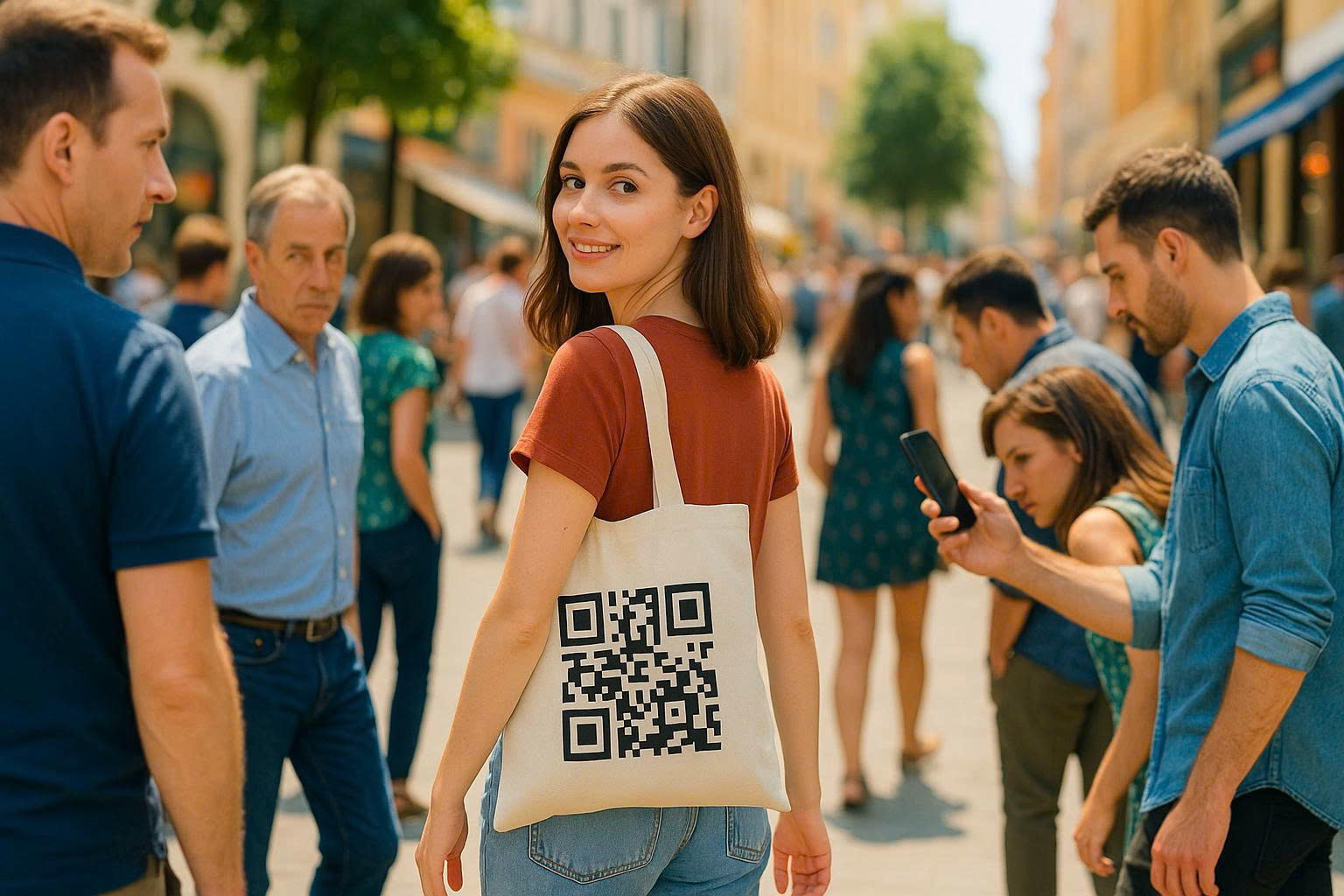
A QR code on a stranger’s shirt can be hard to ignore. In a world crowded with images and information, curiosity—not perfection—is often what makes someone stop and scan.
Brands use that curiosity by printing QR codes on T-shirts, tote bags, and stickers. These everyday items become gateways to the next experience: a website, a game, a hidden video, a promotional campaign, or simply a moment people remember.
QR Codes: From Utility to Emotional Connection
Curiosity Is Human Nature
People are naturally drawn to the unknown. A QR code with no explanation on a shirt or sticker invites an immediate question: “What will I find if I scan this?” It creates a real-world form of gamification.
The Appeal of Unlocking Something Hidden
When someone scans a code and finds a surprise message or piece of content, they are more likely to remember the experience and feel included in something special. That is emotional engagement, rather than just another conventional ad.
5 Reasons QR Codes on Products Make Sense for Marketing
1. Connect Physical and Digital Experiences in One Scan
There is no need to search for or type in a link. People simply hold up their phone and scan.
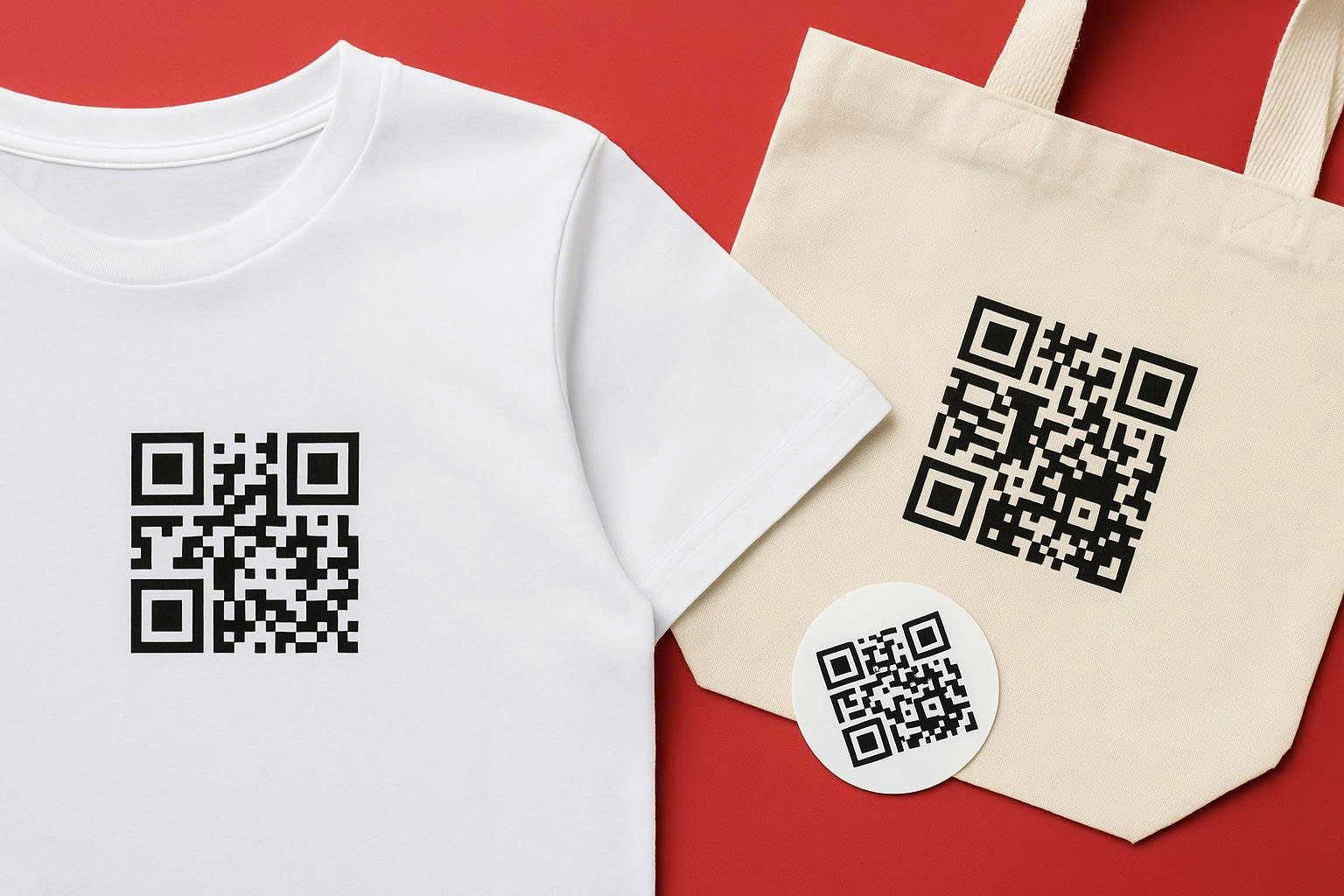
A T-shirt can link to a new product landing page, a tote bag can open an event invitation, and a sticker on a gift box can reveal a personalized thank-you video. Each is simple, yet potentially memorable.
2. Personalize the Shopping Experience
A QR code can direct customers to unique, personalized content. For example:
- Reveal the name of the gift giver
- Unlock a message hidden within the design
- Access an exclusive page for product owners
This kind of personalization can make customers feel recognized, which helps build loyalty.
3. Strong Sharing Potential
When a design is visually striking and interactive, people may want to share it. Some may film themselves testing a QR code on a shirt, creating user-generated content (UGC) without paid advertising.
4. Straightforward Tracking and Analytics
With dynamic QR codes, you can:
- Track the number of scans
- See where scans occur and which devices are used
- Update content in real time
This allows a campaign to be monitored and optimized throughout its run—something printed flyers and banners cannot provide.
5. Extend the Product’s Engagement Lifecycle
Rather than being forgotten after use, a QR-coded shirt or tote can remain an interactive touchpoint: a mobile media channel that people voluntarily carry with them.
How to Design and Print QR Codes on Shirts, Bags, and Stickers
1. Choose the Right QR Code Generator
- qrcode-gen.com – A user-friendly interface with support for high-quality print files
- QRCode Monkey – Extensive color and logo customization
- Canva – Integrates QR codes into creative designs
Tip: Choose dynamic QR codes when you need to update the destination without reprinting the item.
2. Make the Code Eye-Catching and Easy to Scan
- Use a minimum size of 4 × 4 cm.
- Maintain high contrast; black and white is the safest option.
- If you add a logo, keep it to less than 30% of the code area.
- Export SVG or EPS files for vector printing.
For visual flexibility, a custom QR design can help the code fit the product while preserving the practical scanning requirements above.
3. Match the Printing Method to the Product
ProductRecommended Printing MethodNotesT-shirtSilkscreen / DTGPrint on the back or chest; avoid areas that wrinkle easily.Tote bagSilkscreen / Heat transferUse light-colored canvas and place the QR code on the front.StickerPVC decal printingChoose a glossy or matte finish as desired, and always test scanability.
In modern marketing, a small detail such as a QR code can make a difference. Placed well on a shirt, bag, or sticker, it becomes more than something to scan—it can open the door to a broader brand experience.
By sparking curiosity, expanding the product story, personalizing experiences, and providing measurable results, QR codes can be a compact but effective tool for a marketing campaign.
Related Articles
Innovative communication stories