Let’s be honest: most people rarely leave home without their smartphones. Whether it’s for gaming, staying in touch with friends, or browsing online deals from favorite brands, it’s estimated that the average American checks their phone 96 times a day. So, it’s no surprise that QR codes have made a remarkable comeback in recent years, with average usage jumping nearly 26% since 2020. These digital barcodes—easily scanned with a smartphone—are now widely used by businesses like restaurants, music venues, and entertainment outlets to streamline operations and create seamless customer experiences. Not wanting to fall behind in this technological shift, savvy marketers are now leveraging QR codes in their digital out-of-home (DOOH) campaigns to connect with consumers on multiple levels, delivering interactive and engaging ad experiences that bridge the gap between the offline and online worlds.
However, while QR codes may seem like a perfect addition to any creative campaign in theory, there are a few important considerations when it comes to the unique characteristics of programmatic out-of-home advertising.
This article will explore how to effectively integrate QR codes into your DOOH campaigns, transforming your creative advertising into a powerful conversion tool—while maintaining regulatory compliance, visual integrity, and a positive user experience.
How to Use QR Codes in DOOH Advertising
Although the idea of integrating QR codes into DOOH campaigns is still relatively new, it’s quickly gaining traction. Here are a few ways you can use this technology to significantly enhance your next DOOH campaign:
Drive Consumers to Your Website, Landing Page, or Social Media
If you’re looking to promote a specific product or service, QR codes are a fantastic way to direct potential customers straight to your business website or landing page from your DOOH ad. You can also use these codes to connect your audience with your social media accounts, offering a fresh and creative way to engage users and drive online conversions.
.png?width=768&height=512&name=MOCK-Dummy-ads-1080x1920-Hiring%20Campaigns-BiteSquad%20(1).png)
Enable Fast and Easy App Downloads
For upper-funnel campaigns focused on brand awareness and consideration—even if you’re not promoting a specific product—QR codes can work to your advantage. Use them to drive users to your mobile app, making it easier than ever to attract new audiences and grow your user base.
Guide Viewers to Physical Locations
Looking for a creative way to bring customers into your brick-and-mortar locations? Add a QR code to your DOOH ad to provide directions to your store, making it easy for viewers to find your business (or retailers carrying your products)—and encouraging shoppers on the go to stop in.
Share Promotions and Special Offers
Using QR codes to unlock exclusive deals or promotions is an extremely effective way to generate awareness and interest in your brand’s current sales—helping to drive demand and prompt immediate action more easily than ever before.
Key Considerations When Using QR Codes in DOOH
Of course, as with any advertising medium, understanding the unique features, strengths, and requirements of the channel will greatly improve your ability to maximize campaign value. Here are some important aspects of DOOH to keep in mind when incorporating QR codes into your creative:
Choose Your Campaigns Wisely
Rather than trying to use QR codes in every campaign, we recommend deploying them only when you’re aiming to drive a specific action from viewers. For example, if you want to promote an exclusive offer for a new product or boost app downloads, QR codes can be highly effective. However, for campaigns focused solely on general brand or product awareness, QR codes may not be necessary.
Avoid Highway Billboards
Consider this: QR codes require users to pause and interact with your campaign wherever they are. They need time to stop, pull out their phone, open the camera, and scan your creative. For drivers passing highway billboards, taking their eyes off the road to scan a QR code is extremely dangerous—which is why most states have banned them from highway billboards. We recommend playing it safe and steering clear of QR codes in your roadside creative—or in any location where consumers have limited time to stop and engage.
Don’t Overdo It
Ultimately, QR codes should enhance the DOOH creative experience—not detract from it. DOOH advertising is all about capturing attention with compelling visuals, so make sure your code doesn’t draw negative attention or distract from your main message. For example, avoid making your QR code so large or prominent that it overshadows your ad’s imagery.
Best Practices for Using QR Codes in DOOH Creative
Now that you have a clearer understanding of when to include (or not include) QR codes in your DOOH ads, let’s look at some creative best practices to ensure your campaigns deliver maximum results.
Get Creative
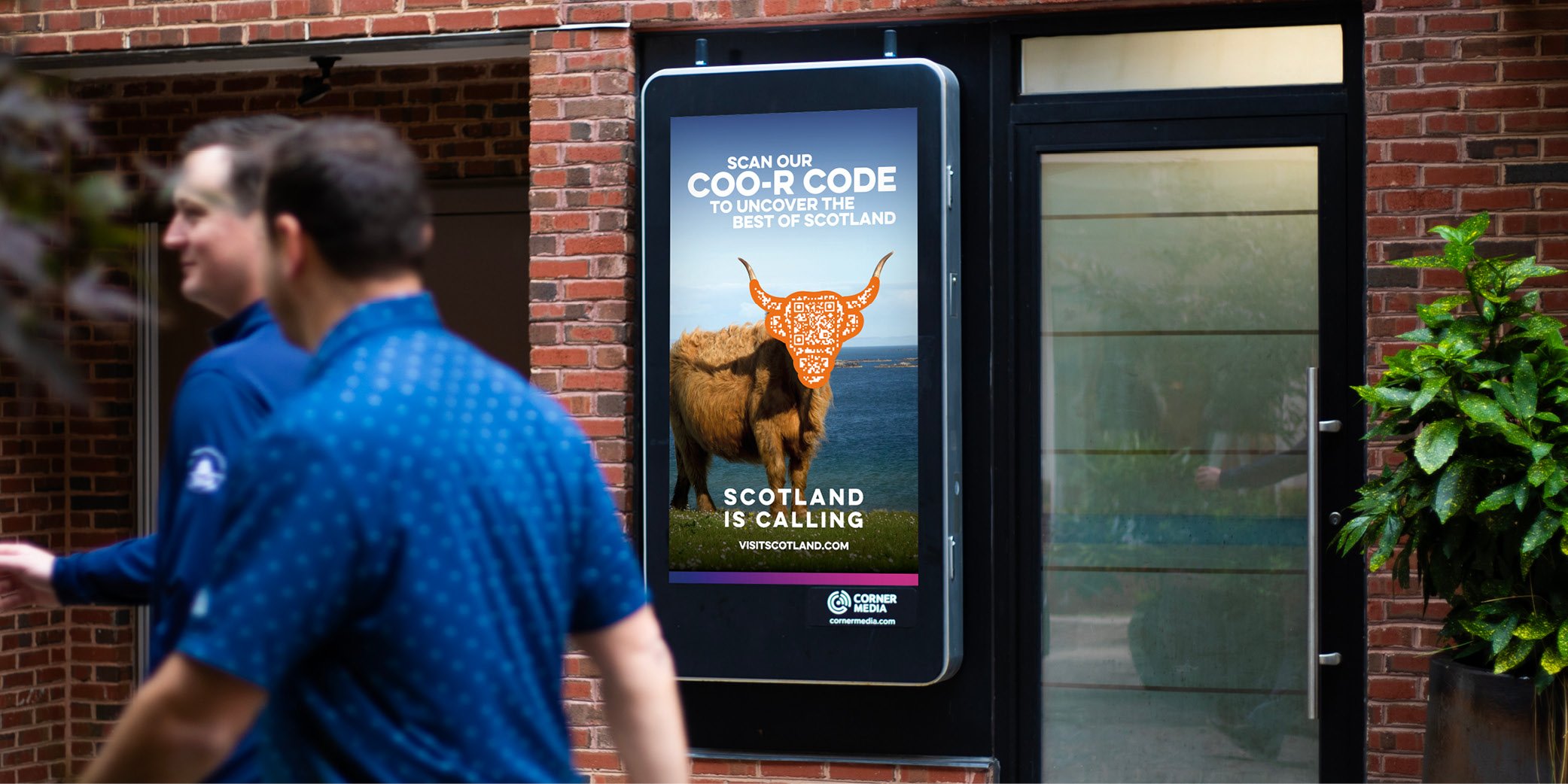
In our experience, QR codes are most effective when they’re seamlessly integrated as an extension of your DOOH creative artwork, rather than tacked on as an afterthought. Instead of simply placing a code on a generic creative asset, look for interesting ways to connect it with your ad’s visuals. This not only creates conversion opportunities but also enhances the visual impact of your DOOH campaign.
Choose the Right Size
When it comes to QR code advertising, size matters. If your code is too large, it can overshadow your message and visuals; too small, and it’s easily overlooked. That’s why it’s essential to optimize your QR code size based on the screen where your ad will appear. For example, larger codes work well for city billboards and other large outdoor displays, while smaller versions are better suited for screens in elevators, taxis, bars, and restaurants. A helpful rule of thumb is to use a 10:1 scan ratio, where the code’s length is one-tenth the distance from which it can be scanned.
Include a Strong Call to Action
QR codes are designed to prompt your customers to take a specific action—whether that’s visiting your store, redeeming an offer, or connecting with your brand on social media. That’s why it’s crucial to pair your QR code with a clear call to action. Use phrases like “Shop Now” or “Download the App” so your audience knows exactly where the QR code will take them and what to expect after scanning.
Place Your QR Code at Eye (or Camera) Level
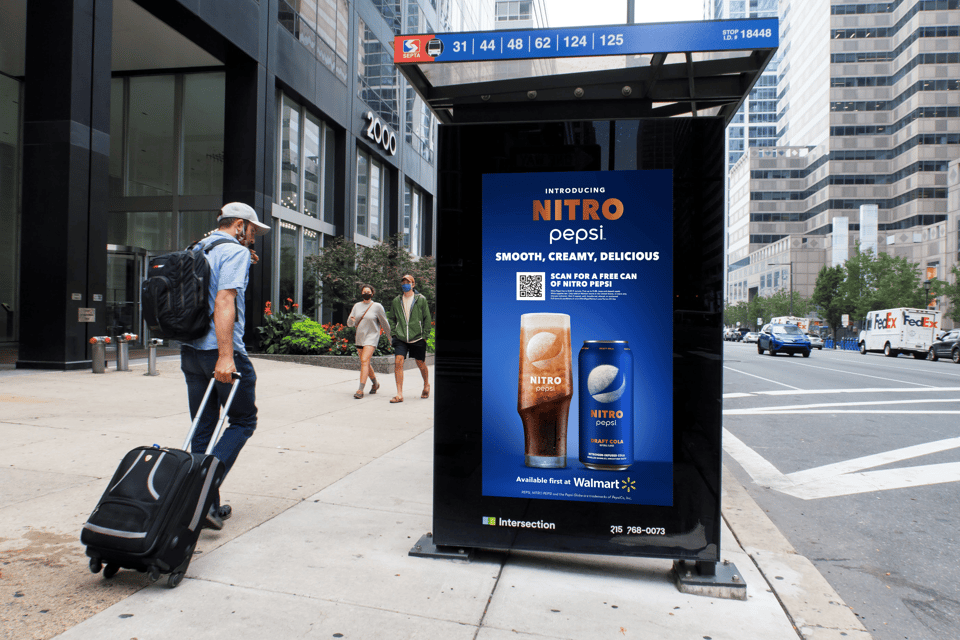
Believe it or not, the vertical angle at which a camera views a QR code affects the distance from which it can be activated. We recommend placing your QR code at eye (or camera) level for the smoothest and easiest scanning experience. For example, on screens installed low to the ground, like at bus stops, the QR code can be scanned from anywhere on the display. However, for screens mounted higher up—such as interactive TVs or gym displays—codes placed near the bottom center are easier to scan.
Consider Dwell Time
DOOH ads are often part of a rotating sequence—meaning your ad may only appear for 15 seconds or less. Choosing locations with longer dwell times, such as bus stops, train stations, restaurants, or shopping centers, ensures viewers have multiple opportunities to see your ad and enough time to interact with your QR code.
Crack the (QR) Code with DOOH
When executed correctly, QR codes can be an incredibly effective addition to your DOOH advertising strategy—offering a unique opportunity to encourage online engagement, drive action for exclusive offers, increase foot traffic to physical locations, and more. By seamlessly integrating QR codes into your DOOH creative and choosing the right locations and screens for your ads, you’ll be able to engage your target audience more effectively and prompt immediate responses from passersby.