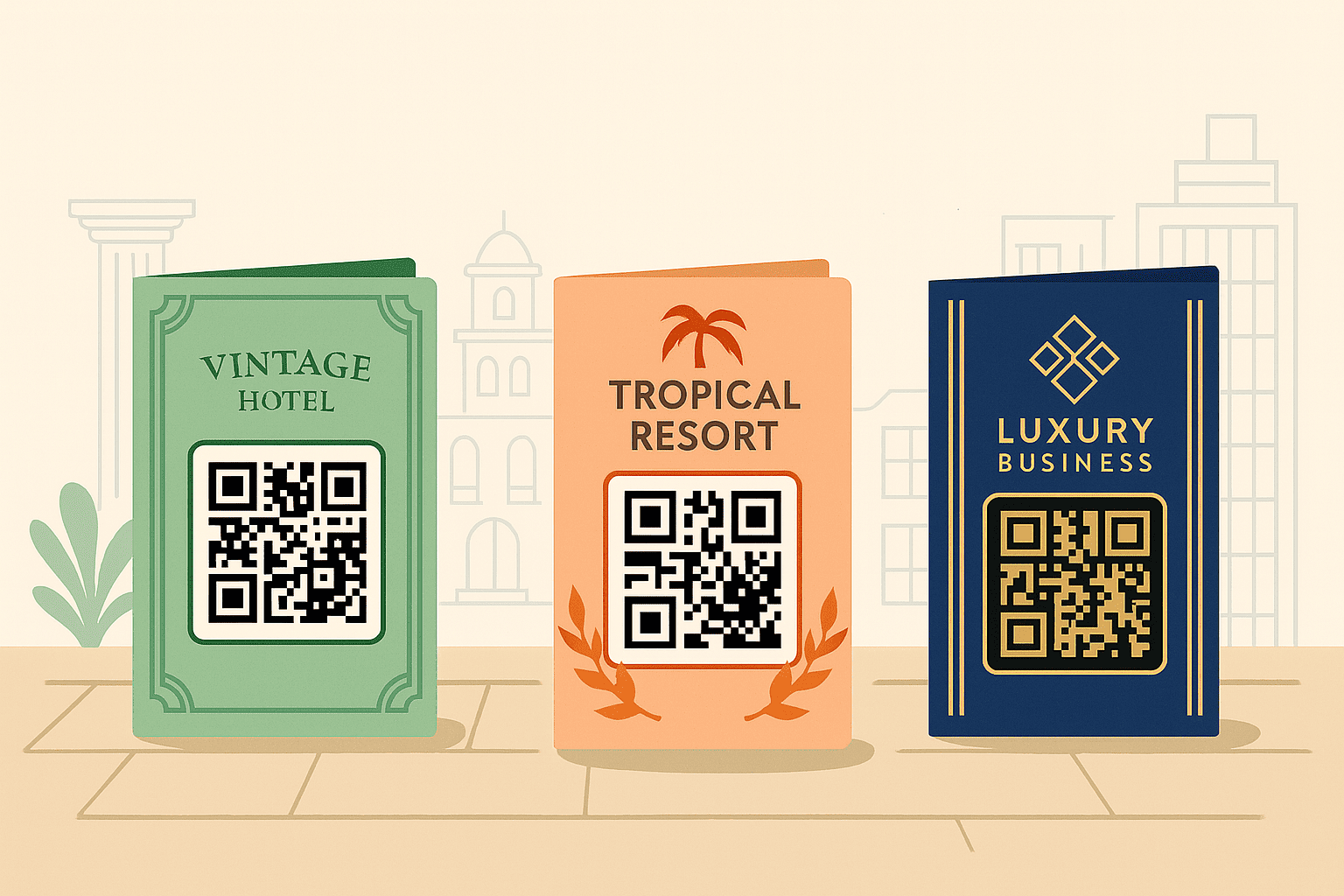
In boutique hotels, luxury resorts, and themed hotel chains—from Art Deco properties to tropical retreats and luxury business hotels—every on-property detail should contribute to the brand story. That includes the food and beverage menu, whether it is printed or digital.
A modern QR code menu offers extensive customization, giving hotels a way to present their culinary offerings while expressing their brand’s character and style. It can make a strong impression from the first digital interaction.
1. Aesthetic Customization: Keeping the Design Consistent with Your Brand
The visual design of a QR code menu should feel at home within the hotel’s physical setting.
1.1. Apply Your Brand Color Palette Precisely
Mistake to avoid: Relying on default colors, such as white or gray, that have no connection to your brand identity.
Professional customization: QR code menu platforms let you enter exact brand color values, including hex codes. Hotels can tailor the background, text, buttons, and borders to reflect the palette used in their interiors and logo.
- For example: A classic hotel might use antique gold and deep brown, while a beachfront property could choose turquoise and cream.
1.2. Use Consistent Typography and Layout
- Create a sense of luxury: Font choice directly shapes how guests perceive the menu. Upscale hotels should use elegant, highly legible typefaces, such as premium serif or sans-serif fonts.
- Keep the content organized: Structure the menu logically with clear categories, such as Appetizers, Main Courses, Wines, and Cocktails. Generous white space and distinct headings create a clean, comfortable presentation suited to five-star standards.
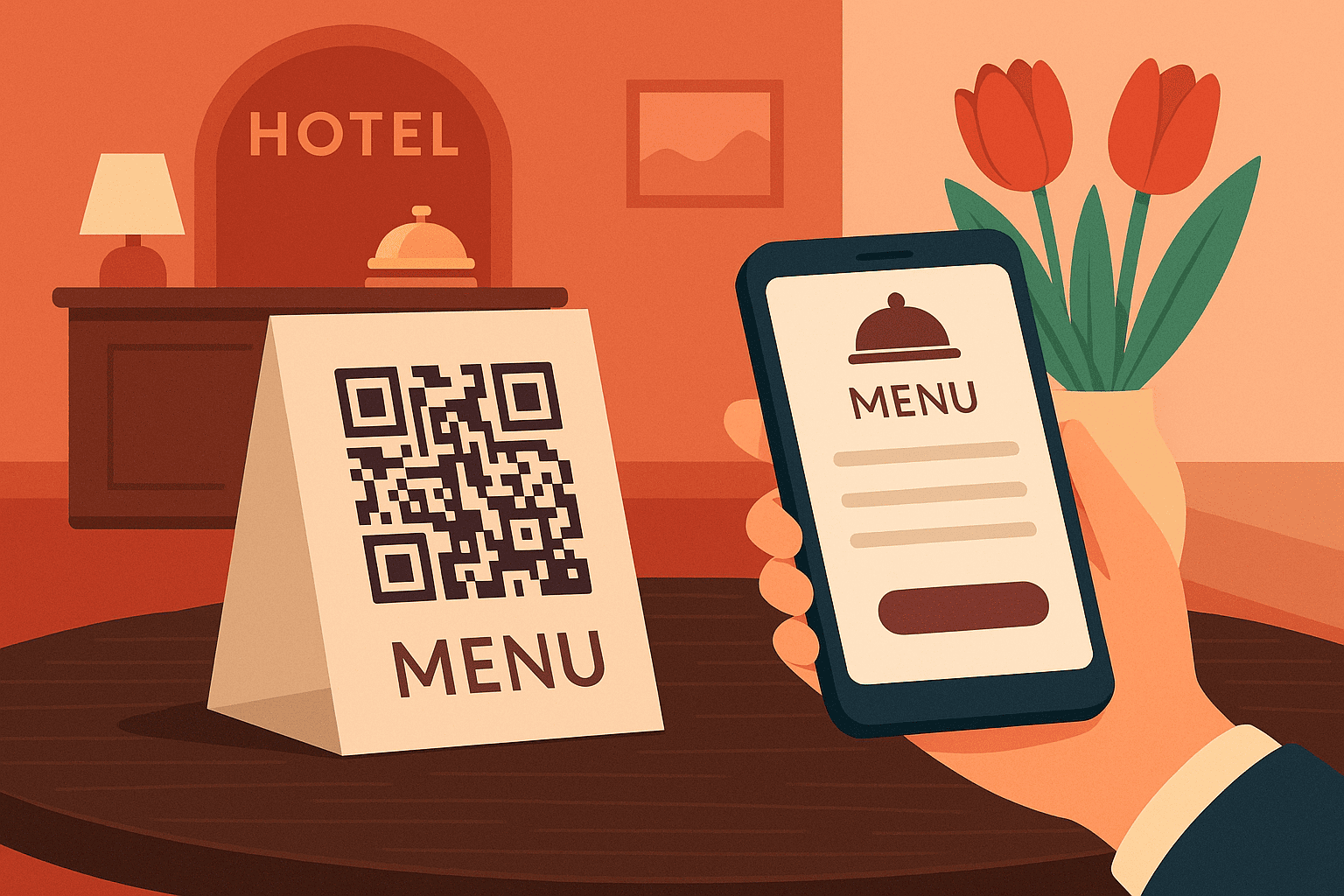
2. Personalized Content: Tell Your Hotel’s Story
A QR code menu can also communicate your hotel’s culinary culture and service philosophy.
2.1. Use High-Quality Images That Fit the Theme
Cinematic food photography: Invest in high-quality dish photography with lighting and composition that complement the hotel’s interior design.
- For example: At a tropical resort, dishes can be photographed in natural light with lush greenery or the pool as a backdrop.
Subtle backgrounds and watermarks: Soft background images or watermarks featuring signature hotel details—such as embroidered carpet patterns or distinctive lobby architecture—can reinforce brand recognition while guests browse.
2.2. Write Engaging, Locally Inspired Descriptions
- Highlight what makes each dish distinctive: Go beyond basic descriptions. Mention the local origin of ingredients, share the story behind traditional recipes, or connect a dish to local culture.
- Create an emotional connection: Thoughtful descriptions can leave a lasting impression and increase the perceived value of each dish, encouraging guests to order more.
3. Streamline Operations with Custom QR Codes
Customization is not limited to the menu interface. The physical QR code itself can also reflect the brand.
3.1. Design QR Codes That Match Your Brand
- Move beyond plain black-and-white codes: With a custom QR design, hotels can change colors, add the hotel logo in the center, or adjust corner shapes.
- Build trust: A QR code featuring your logo looks more professional and can give guests more confidence than a generic black-and-white code.
3.2. Personalize Menus by Location
Different menus for different areas: Hotels can create multiple menu interfaces linked to one master QR code using dynamic QR technology:
- Guest rooms: Display room service and laundry menus.
- Poolside bar: Show drinks, snacks, and ice cream only.
- Spa: Display detox drinks and fresh juices only.
Operational efficiency: Organizing menus by location helps guests find options suited to their setting and can simplify order management for restaurants and bars.
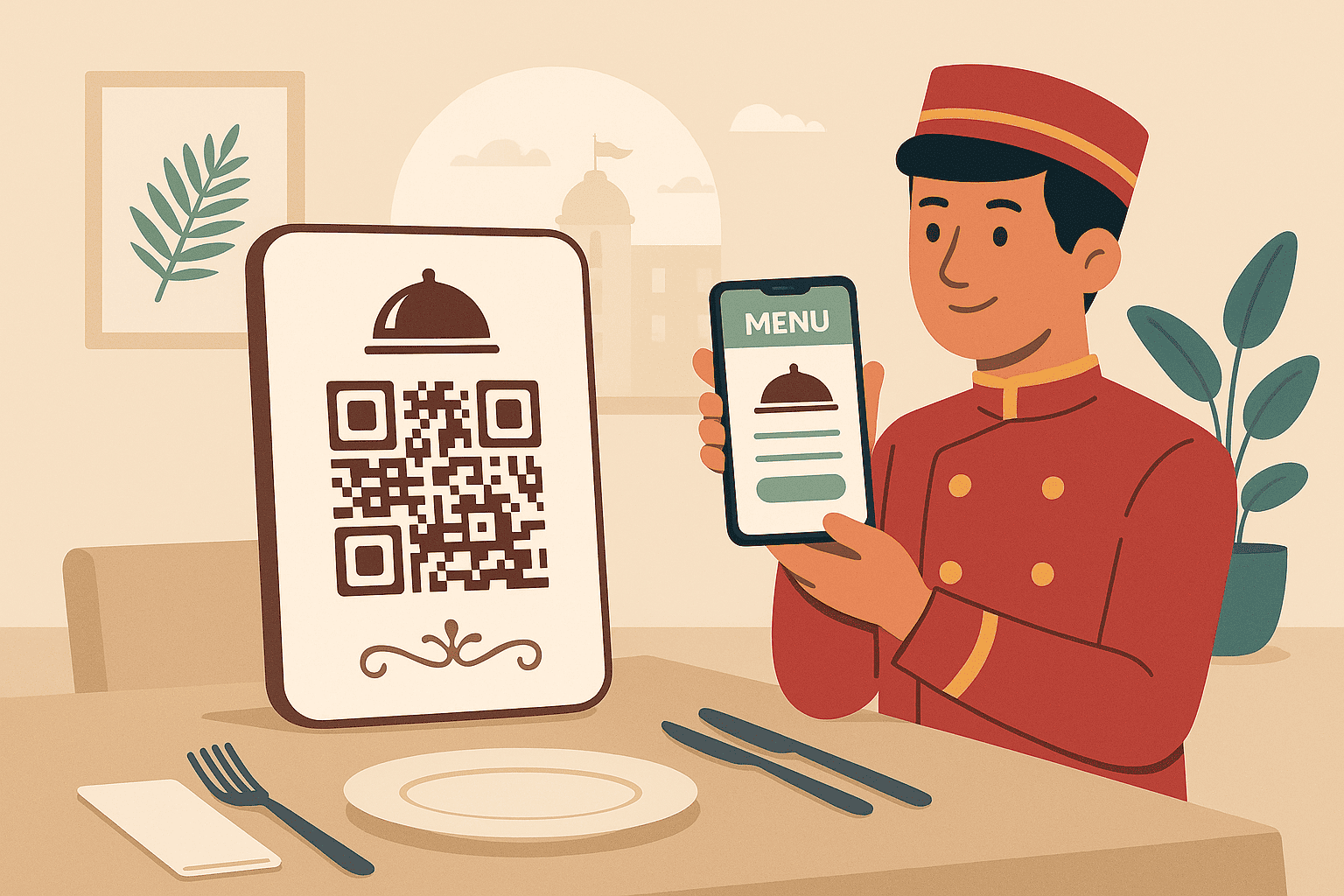
4. How Custom Menus Shape the Guest Experience
A thoughtfully customized QR code menu can enhance guest satisfaction and encourage repeat visits.
4.1. Reinforce Your Brand
Each scan gives guests another interaction with a carefully curated brand experience. Consistent design across the landing page and QR code colors creates a polished, seamless journey that helps guests recognize and remember the hotel.
4.2. Make the Culinary Offering More Appealing
An attractive interface, high-quality food photography, and engaging descriptions can elevate perceived value. Guests may be more willing to pay for dishes that are presented beautifully and professionally in a well-designed digital menu.
4.3. Analyze Design Performance
Dynamic QR codes allow hotels to track analytics related to guest interactions with the menu.
- For example: If a menu page with a static background image receives lower engagement than one with a dynamic background, such as a short video, the hotel can adjust the design accordingly to better attract guests.
A QR code menu is an opportunity to demonstrate your hotel’s attention to detail. Treat it as part of the brand experience, not simply as a convenience.
Customize your QR code menu to tell the distinctive story of your hotel brand. Use advanced options such as logos, hex color codes, fonts, and backgrounds to create a digital menu that matches your property’s style.