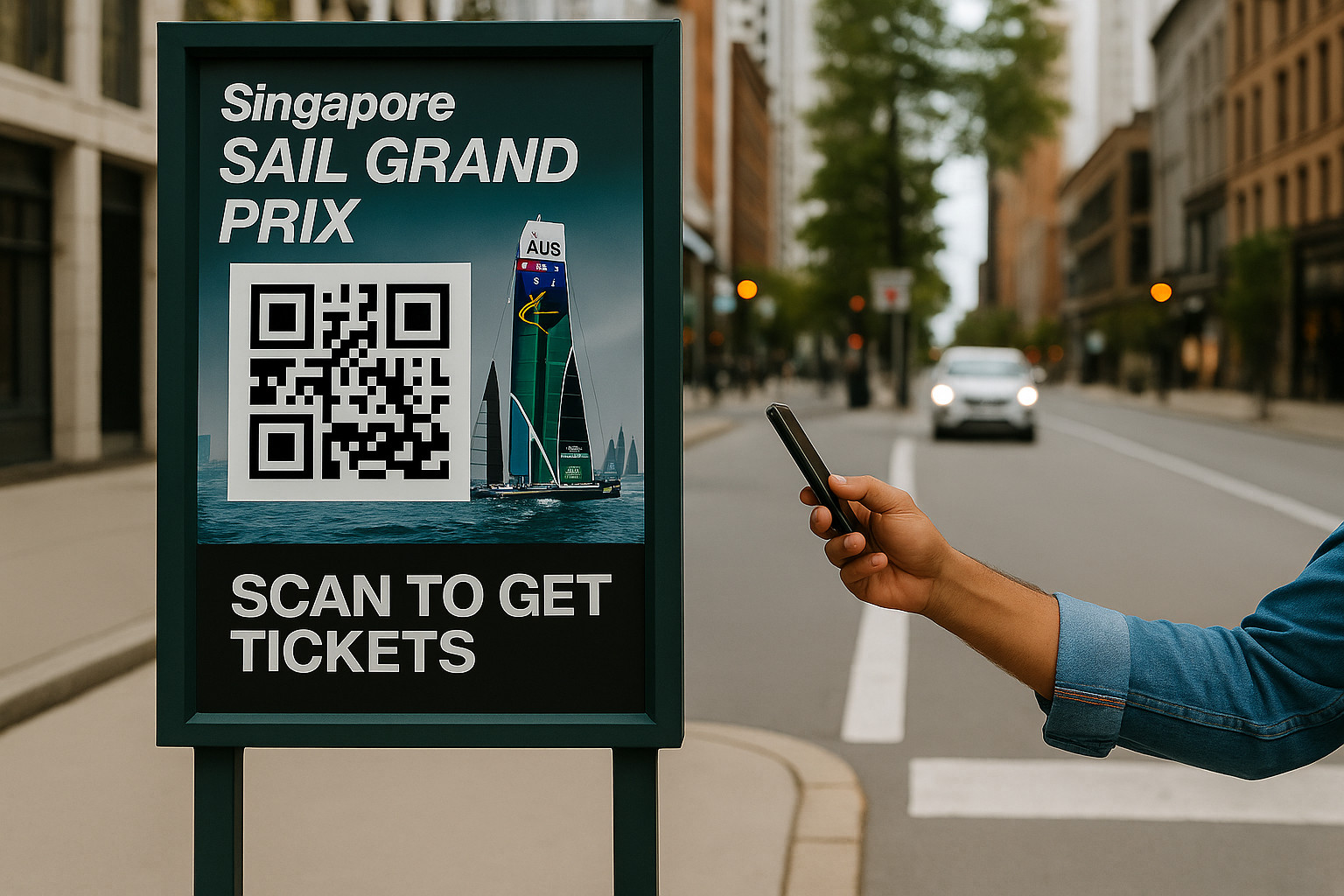
Getting a QR code in front of people is only the first step. The real challenge is giving them a reason to scan it. These five practical strategies can help businesses, marketers, and event organizers increase QR code scans within seven days while improving real-world engagement and conversions.
1. Optimize QR Code Placement and Size
Poor placement is one of the most common reasons QR codes receive few scans. Position the code at eye level, keep it clearly visible and unobstructed, and make sure it is easy to capture with a smartphone camera. The code should also be large enough to scan comfortably from a reasonable distance.
In supermarkets or at exhibitions, for example, a code placed too low, printed too small, or tucked into a dim corner can be difficult for cameras to focus on, creating a frustrating experience. An internal Qrcode-gen study found that increasing the size of a QR code from 3 x 3 cm to 6 x 6 cm at check-in points increased scan rates by up to 42% within five days.
2. Use Creative Design to Capture Attention
A QR code does not need to be a plain black-and-white square. Eye-catching frames, playful illustrations, and brand colors can create curiosity and encourage people to interact. A custom QR design can help the code feel at home on a vibrant poster, an engaging menu, or even as part of a game.
Many brands have demonstrated the impact of visual appeal. When a local coffee shop displayed a pixel-art QR code at its entrance, scan rates tripled in one week. People stopped to photograph the QR poster, not just look at the products.
3. Pair QR Codes with Incentives or Compelling Reasons to Scan
People are unlikely to scan when they do not know what’s in it for them. A clear call to action, such as “Scan to get 10% off,” “Try your luck with our prize wheel,” or “Download free resources,” gives them a compelling reason to act.
Immediate, tangible benefits are often the fastest way to increase scans. During a flyer campaign at a startup fair, a fintech company used a QR code that led to a landing page offering a free eBook. The campaign generated more than 1,200 scans in 48 hours, driven by one simple message: “Scan to get your FREE Startup Guide.”
4. Combine QR Codes with Movement or Interactive Elements
A stationary QR code can be easy to miss. When it appears on moving objects such as bicycles, delivery scooters, or drones—or is worn by people handing out gifts—it is more likely to catch attention and spark curiosity.
One notable example was a bicycle-based QR code campaign in the Netherlands. Bikes carrying QR code signs traveled through the city and invited people to “Scan me to discover a fun fact about this city.” In one week, the campaign recorded more than 50,000 scans, primarily from tourists and younger local residents.
Movement creates a focal point. Sound, lighting, or an unexpected reveal—such as a QR code suddenly appearing on a coffee table—can make the experience more noticeable and increase its viral potential.
5. Track Performance and Adjust in Real Time
No campaign is perfect at launch, which makes real-time scan tracking essential. Professional QR code platforms can provide detailed analytics, including scan locations, devices used, peak times, and more.
For instance, if the code at the right-hand entrance receives three times as many scans as the one at the left, concentrate your messaging or offers in that area. If scans are most common at night, add lighting or tailor the content to evening needs, such as late-night food discounts.
With a dynamic QR code, you can update the destination without reprinting the code. This makes it possible to run A/B tests: link A for a short-term offer, link B for a feedback survey, and link C for a mini-game. The results can reveal which approach is most effective.
Higher QR code scan rates do not come down to luck. They come from combining smart placement, strong design, clear incentives, interactive elements, and ongoing measurement. Apply these five factors to make your QR codes more visible, engaging, and valuable to your audience.